A food recall is the controlled removal or correction of a food that has already entered the market, a customer warehouse or a distribution route. A successful recall is not improvised on the day of the incident; it is prepared by disciplined records beforehand.
When the issue is microbiological risk, undeclared allergen, foreign material, wrong label, shelf-life deviation or raw-material nonconformity, the decisive question is simple: which product is affected, where is it, who has it and how much remains?
ManuFox supports this work by connecting lot-based traceability and recall reporting so the problem lot, related production, shipments and customer records can be reviewed in one chain.
Why recall management is strategic
A recall is not only a compliance action. If it is managed poorly, consumer safety, brand trust, customer contracts, insurance processes and relationships with authorities can be affected at the same time.
For food businesses, a recall is a crisis-management workflow where quality assurance, production, sales, logistics, customer service, legal and leadership must work from the same facts. Accuracy matters as much as speed, because the wrong scope can harm both consumer safety and business credibility.
- Microbiological contamination requires rapid action.
- An undeclared allergen may look like a labeling issue but can create high risk.
- Foreign-material cases require analysis of lot, line, time and equipment links.
- When the root is raw material, every production touched by the same supplier lot must be visible.
- Wrong shelf life or storage conditions can require customer notification.
Scope definition: the hardest and most critical step
If recall scope is too narrow, unsafe product may remain in the market; if it is too broad, unnecessary cost and trust loss occur. That balance is only possible with reliable lot relationships.
Scope evaluation must include not only warehouse stock, but also shipped quantity, customer inventory, retail status, returns, sample records and any semi-finished goods that used the same lot.
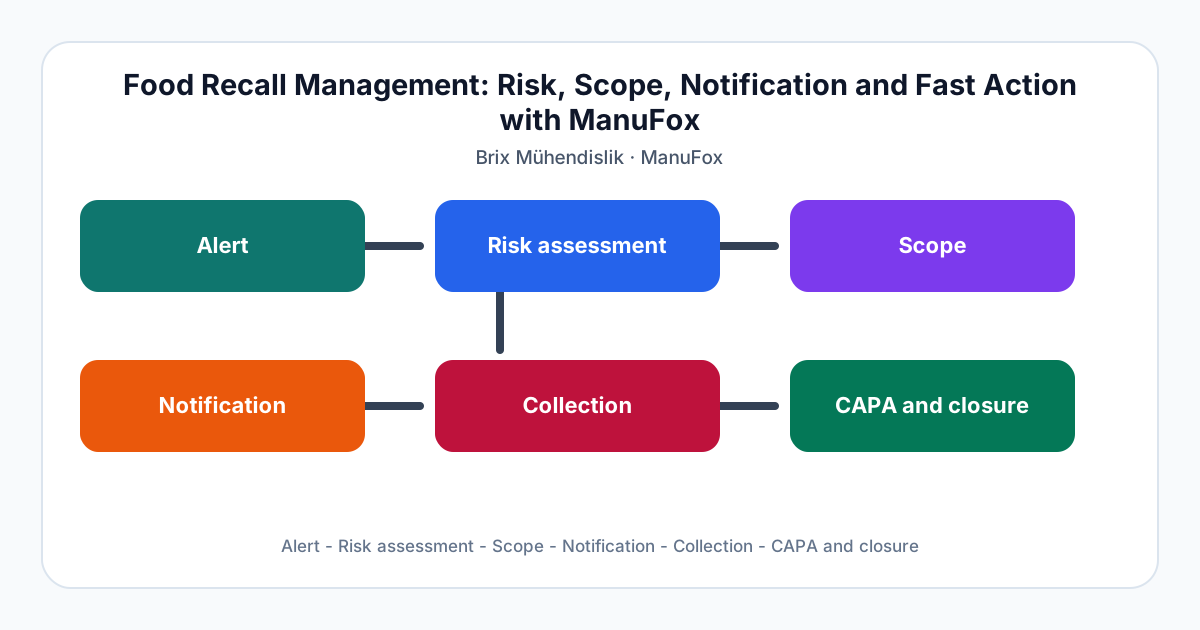
- Record the first signal and its source.
- Assemble the food-safety team.
- Define the problematic lot or lot range.
- Use forward tracing to identify affected finished goods and customers.
- Use backward tracing to investigate root cause and common raw materials.
- Tie blocking, sales stop, customer notification and regulatory notification decisions to records.
- Close collection, destruction, rework or release outcomes with evidence.
Notification, blocking and evidence pack
Once a recall decision is made, communication must rely on a single controlled version. Product name, lot, date, risk explanation, customer action, return or destruction instruction, contact person and closure method should remain consistent.
- Block remaining stock in the system.
- List shipped customers by lot.
- Make sure sales, quality and warehouse teams use the same information.
- Connect customer responses and recovered quantities to the incident record.
- Close with root cause, corrective action, preventive action and effectiveness check.
Recall workflow with ManuFox
The value of ManuFox is that it can read a problem lot together with its production and shipment relationships, not merely as a stock row. Teams can see affected finished lots, customers and documents faster.
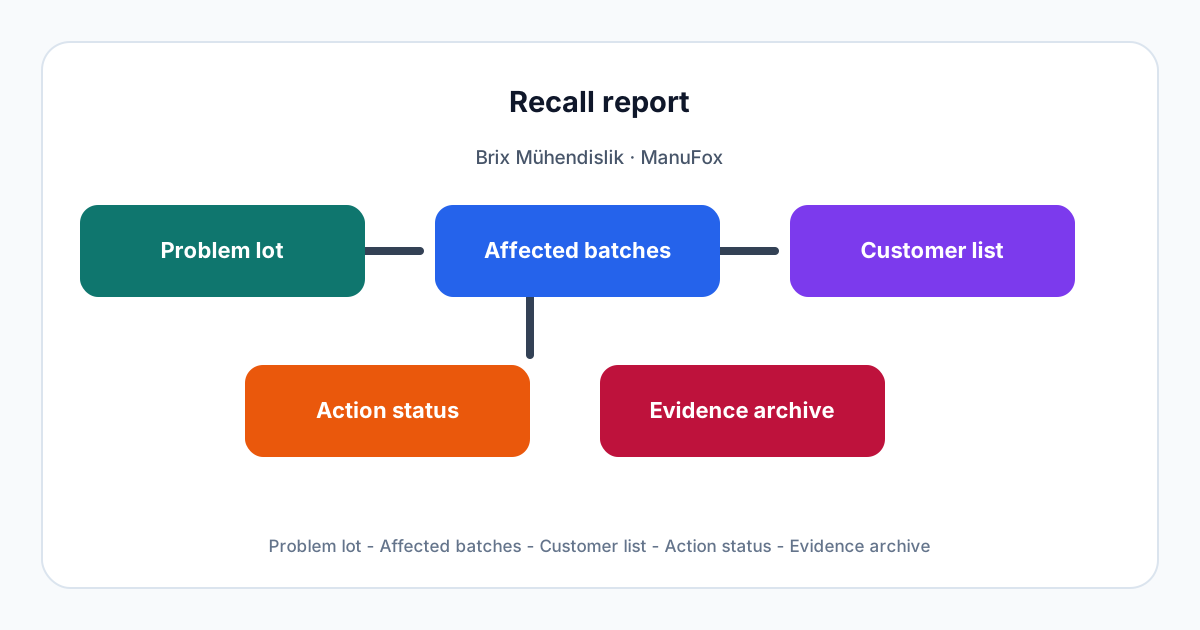
ManuFox positions its traceability module together with lot tracking and recall management. In a recall, that means generating a report from material, production, quality and shipment relationships instead of merging separate spreadsheets.
- A problematic raw-material lot can lead to the work orders where it was used.
- Work orders can show finished lots and packaging relationships.
- Finished lots can lead to customer shipments and delivery documents.
- Quality-control results support the technical reasoning behind the decision.
- The recall report lets teams discuss the same data set.
- Authorized users can keep blocking and action status under record control.
- The event timeline remains available for later CAPA work.
Mock recall is a stress test for records
A mock recall at least once a year shows the real speed of the system and exposes data gaps. The drill should test not only reporting but also phone trees, customer notification, blocking, return and closure records.
A good drill is designed like a small rehearsal of a real recall. The team selects a finished lot, traces backward to materials, traces forward to customers, blocks remaining stock and prepares a sample customer notice.
- Target time: less than 2 hours for the first scope report.
- Target accuracy: shipped, remaining and returned quantities should reconcile.
- Target communication: sales, quality, warehouse and leadership should use the same version.
- Target closure: root cause, corrective action, preventive action and effectiveness check should be documented.
Conclusion: recall readiness starts with daily records
Food recall capability is won not only by speed during the crisis, but by the reliability of records created every day. The value of a food-focused ERP such as ManuFox appears here: by keeping lot relationships, quality decisions and shipment records in the same structure, it makes recall decisions faster, clearer and more defensible.
Sources and ethical use note
No competitor sites or unclear-license sources were used. The external knowledge base was limited to official ManuFox pages, FDA public-domain materials, EUR-Lex legal text and the European Commission reuse policy. This article is not legal advice; food businesses should verify requirements against local regulations and customer standards.